![ALTUVIIIO® [Antihemophilic Factor (Recombinant), Fc-VWF-XTEN Fusion Protein-ehtl] logo](/.imaging/default/dam/Marketing/AltuviiioUS/altuviiio.webp/jcr:content.webp)
Mild, moderate, and severe hemophilia A
Hemophilia A is a rare condition where the blood doesn’t clot the way it should. This happens because the body doesn’t make enough of a clotting protein called Factor VIII. Without this protein, bleeding can last longer than normal after an injury or surgery, or can even happen without a clear cause in cases of severe hemophilia.
What are the 3 severity levels of hemophilia A?
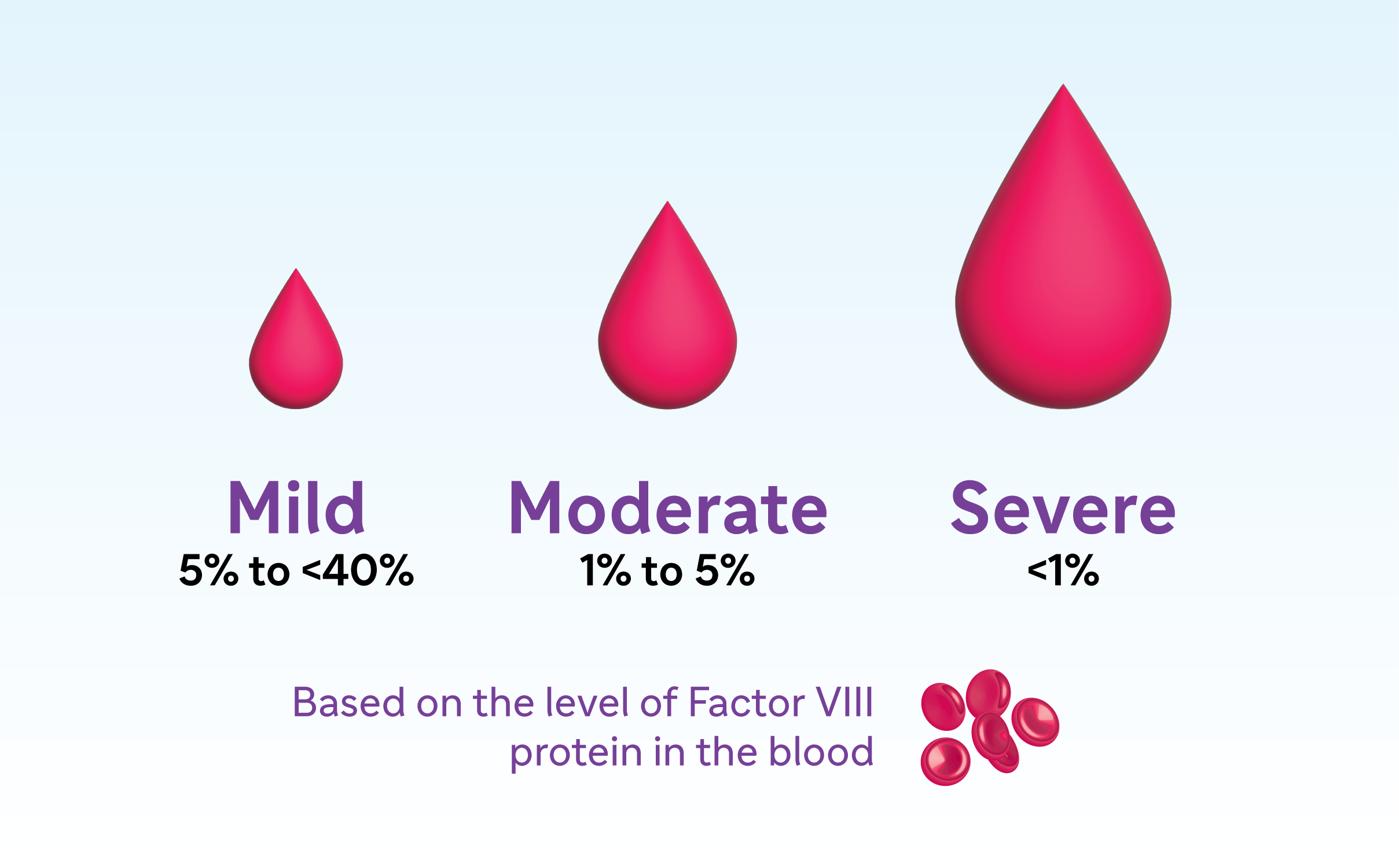
Hemophilia A is caused by a deficiency in Factor VIII, one of the proteins that helps blood to form clots. Based on the level of Factor VIII protein in the blood, the 3 levels of hemophilia A severity are:
- Mild
- Moderate
- Severe
Hemophilia should be taken seriously, irrespective of the severity. At right is a breakdown of the symptoms associated with each level.
What is mild hemophilia?
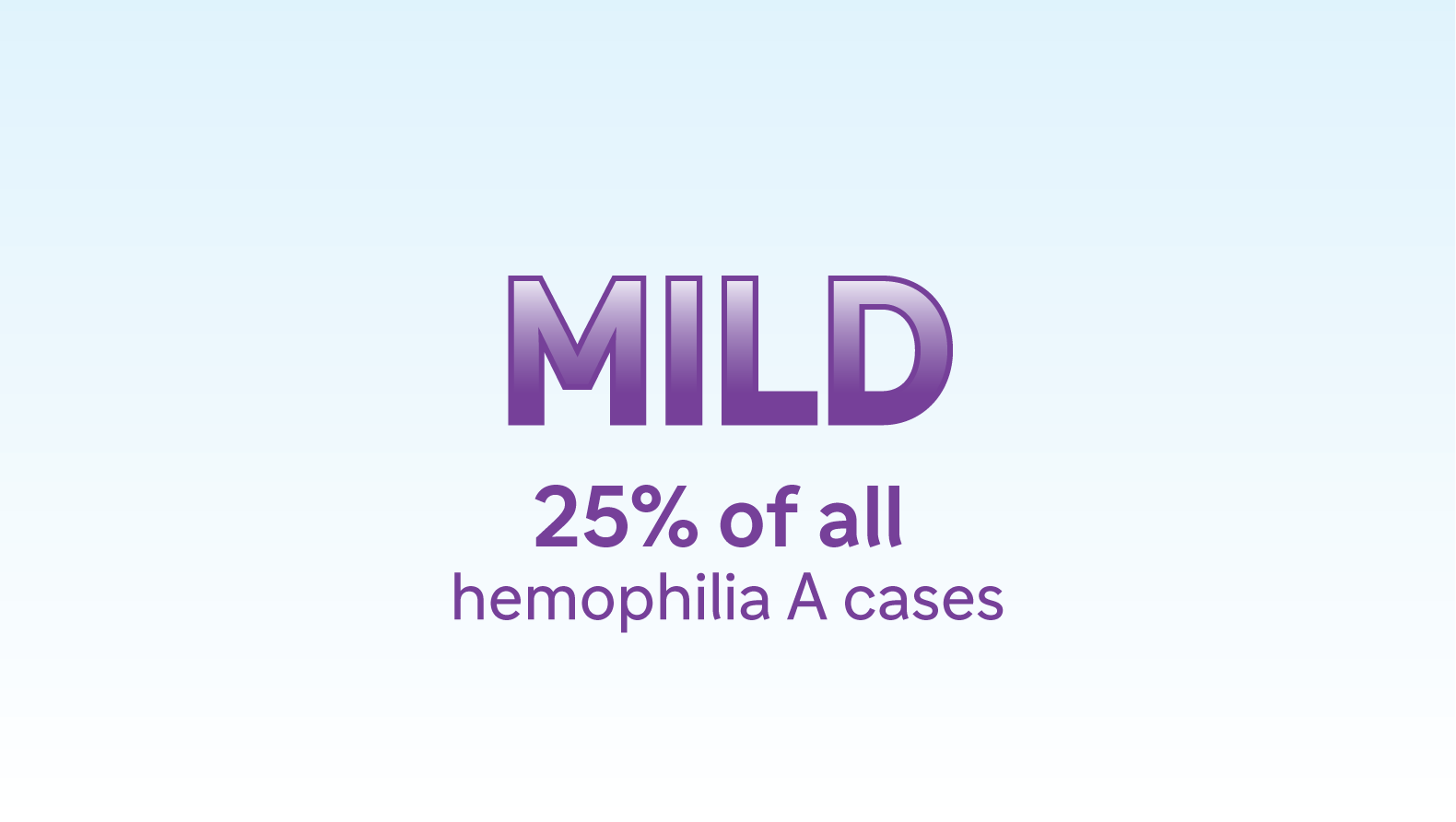
People with mild hemophilia A have Factor VIII levels that are 5% to <40%. Mild cases make up around one-quarter of all hemophilia A cases.
Mild hemophilia A symptoms
- Prolonged periods of bleeding following significant injury, surgery, or dental work
- Heavy menstrual bleeding and postpartum hemorrhage in women with mild hemophilia
- Rare spontaneous bleeds

What is moderate hemophilia A?
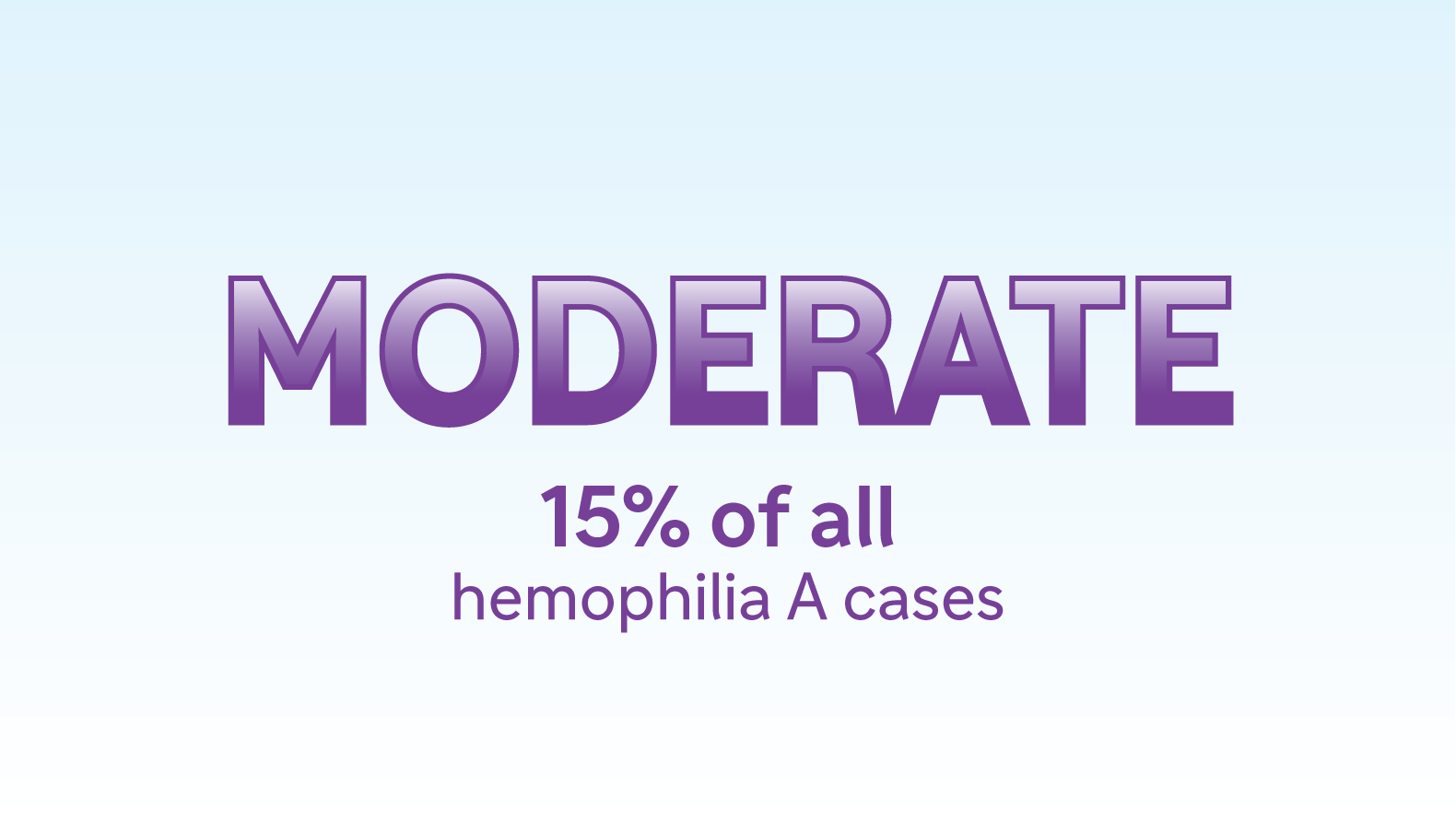
Moderate hemophilia A, with Factor VIII levels at 1% to 5%, accounts for 15% of all hemophilia A cases.
Moderate hemophilia A symptoms
- Easy bruising
- Excessive and prolonged bleeding following injury, surgery, or dental work
- Occasional spontaneous bleeding
What is severe hemophilia A?
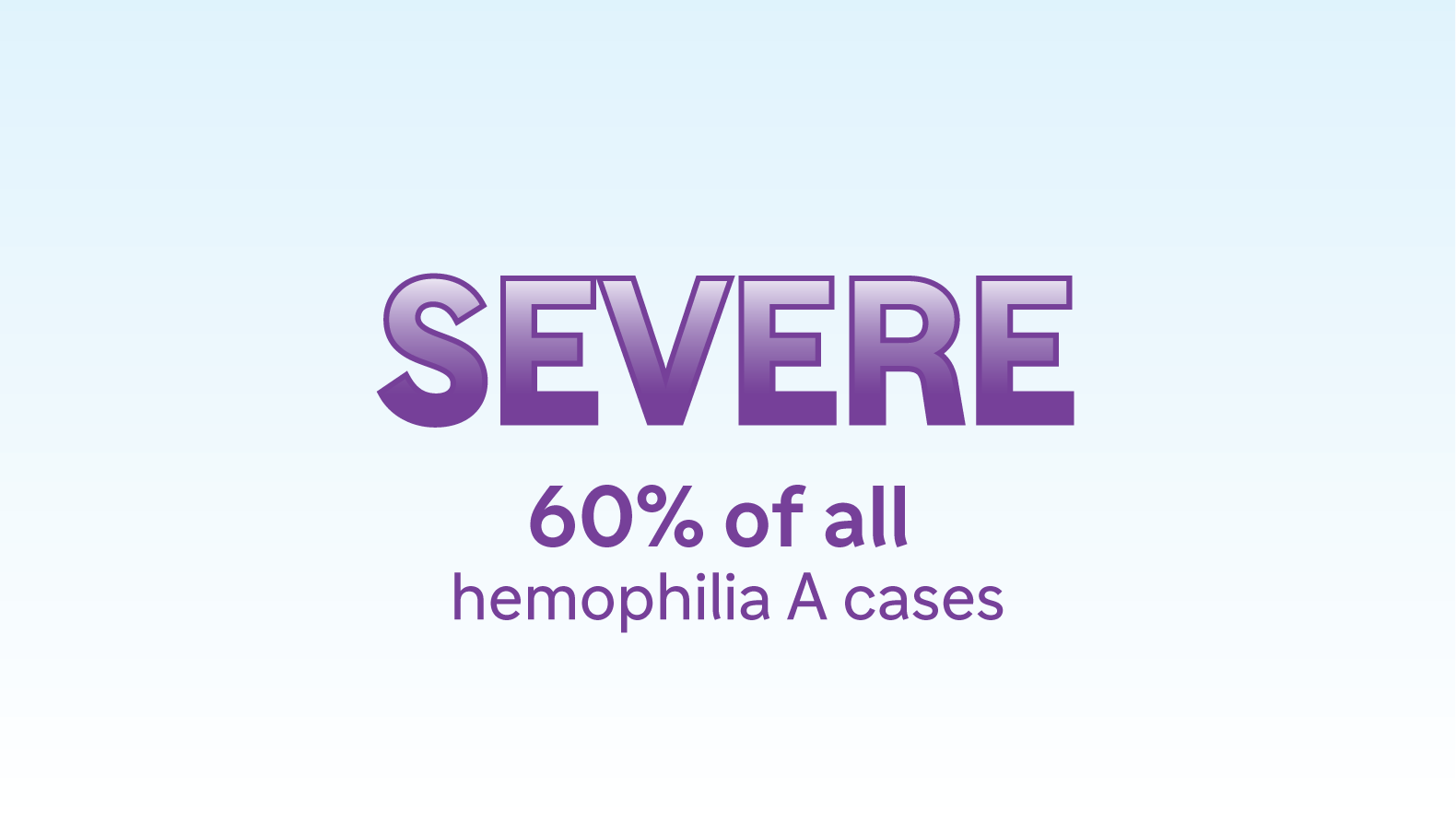
Severe hemophilia A, marked by Factor VIII levels of less than 1%, represents 60% of hemophilia A cases. With treatment advances, severe hemophilia life expectancy has improved, but early and consistent care is critical.
Severe hemophilia A symptoms
- Frequent spontaneous bleeding
- Frequent bleeding into joints that can lead to chronic pain and joint damage
How is hemophilia A severity diagnosed?
Hemophilia A severity levels are determined by the level of Factor VIII protein in the blood. Doctors can measure this with a blood test. Since Factor VIII helps blood to form clots, the less Factor VIII protein a person with hemophilia A has, the more severe their condition will be.
Hemophilia A management and
prevention of bleeds
Hemophilia A is treated by replacing the missing Factor VIII protein, or by replacing the function of it, so that the blood can clot properly. Several treatment options are available for this, and they vary based on the severity of the case. For more serious cases, patients may receive comprehensive care and individualized treatment plans from their healthcare team, including prophylaxis and on-demand treatments, to prevent and manage bleeding episodes effectively.
What are the main treatment options?
Treatment is tailored to severity and daily life needs.
- Prophylaxis: Regular infusions to prevent bleeding before it starts. This is recommended for people with moderate to severe hemophilia A
- On-demand therapy: Administered after a bleeding episode starts—commonly used in mild to moderate cases or before certain medical procedures
What about ongoing care?
People with cases of more severe hemophilia A often receive comprehensive care through a hemophilia treatment center, where a care team can help address all issues related to the disorder.
It is crucial to recognize the unique challenges faced by people with hemophilia and to continue to advocate for better care and understanding for patients living with this condition.
Key takeaways
- The 3 levels of hemophilia A severity—mild, moderate, and severe—are determined by the levels of Factor VIII protein in the blood
- Symptoms and treatment can vary depending on the severity of each person’s condition
- Regardless of severity, hemophilia A requires ongoing care to help patients lead active, healthy lives
Find your CoRe Manager and connect today!
Sanofi Hemophilia Community Relations and Education (CoRe) Managers offer education to
people living with hemophilia and their families. CoRe Managers provide information about
living with hemophilia and treatment options. Use our handy CoRe Locator to find the CoRe
team member nearest you.
ALTUVIIIO® [antihemophilic factor (recombinant), Fc-VWF-XTEN fusion protein-ehtl] is an injectable medicine that is used to control and reduce the number of bleeding episodes in people with hemophilia A (congenital Factor VIII deficiency).
Your healthcare provider may give you ALTUVIIIO when you have surgery.
What is the most important information I need to know about ALTUVIIIO?
Do not attempt to give yourself an injection unless you have been taught how by your healthcare provider or hemophilia center. You must carefully follow your healthcare provider’s instructions regarding the dose and schedule for injecting ALTUVIIIO so that your treatment will work best for you.
Who should not use ALTUVIIIO?
You should not use ALTUVIIIO if you have had an allergic reaction to it in the past.
What should I tell my healthcare provider before using ALTUVIIIO?
Tell your healthcare provider if you have had any medical problems, take any medications, including prescription and non-prescription medicines, supplements, or herbal medicines, are breastfeeding, or are pregnant or planning to become pregnant.
What are the possible side effects of ALTUVIIIO?
You can have an allergic reaction to ALTUVIIIO. Call your healthcare provider or emergency department right away if you have any of the following symptoms: difficulty breathing, chest tightness, swelling of the face, rash, or hives.
Your body can also make antibodies called “inhibitors” against ALTUVIIIO. This can stop ALTUVIIIO from working properly. Your healthcare provider may give you blood tests to check for inhibitors.
The common side effects of ALTUVIIIO are headache and joint pain.
These are not the only possible side effects of ALTUVIIIO. Tell your healthcare provider about any side effect that bothers you or does not go away.
Please see full Prescribing Information.
Learn more about Sanofi’s commitment to fighting counterfeit drugs.
![ALTUVIIIO [Antihemophilic Factor (Recombinant), Fc-VWF-XTEN Fusion Protein-ehtl] logo](/dam/jcr:0bd6aa08-1390-4c29-8440-7d6809e35b97/Altuviiio.2025-09-16-18-53-38.svg)