![ALTUVIIIO® [Antihemophilic Factor (Recombinant), Fc-VWF-XTEN Fusion Protein-ehtl] logo](/.imaging/default/dam/Marketing/AltuviiioUS/altuviiio.webp/jcr:content.webp)
Hemophilia carriers — inheritance, statistics, and symptoms
Hemophilia is a hereditary bleeding disorder affecting both men and women, in which blood does not clot properly. Historically, the focus on hemophilia has been predominantly on men due to hemophilia’s X-linked recessive condition; however, women who are carriers of the gene face unique challenges and misconceptions concerning the inheritance patterns of hemophilia.
Understanding hemophilia inheritance
A hemophilia carrier is typically a female who has one copy of the gene mutation that causes hemophilia. While hemophilia is often associated with men, female hemophilia carriers can also experience symptoms. Understanding why females are carriers of hemophilia—and how it’s inherited—is key to diagnosis, management, and genetic counseling.

Why are only females carriers of hemophilia?
While hemophilia is more common in men, women can also be affected if both X chromosomes carry the mutation or if one X chromosome is affected and the other is non-functional. Women carriers of the hemophilia gene may experience symptoms of hemophilia, challenging the misconception that women can only be carriers and not have hemophilia.
Can a male be a carrier of hemophilia?
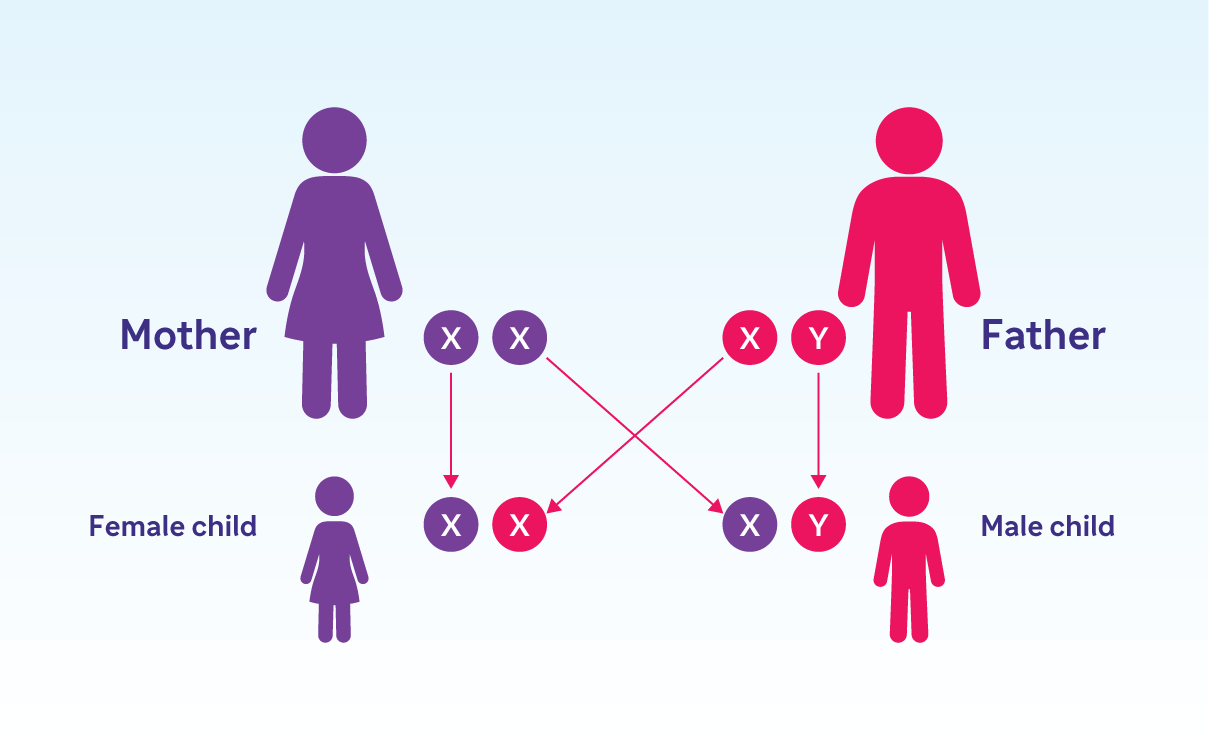
No. Men inherit one X chromosome from their mother and one Y chromosome from their father. If the X chromosome from the mother carries the affected gene, men will have hemophilia—not carrier status. Women have two X chromosomes and are considered carriers if they inherit one affected gene. However, this carrier status does not preclude women from experiencing symptoms themselves.
How do children inherit hemophilia?
Being a hemophilia carrier means there is a chance of having a child affected by hemophilia. For female hemophilia carriers who have a mutation on one of their two X chromosomes, there is a:
- 50% chance of having a male child affected by hemophilia
- 50% chance of having a female child who is a hemophilia carrier
The diagram to the left shows how children inherit chromosomes from each parent.
How do I know if I am a hemophilia carrier?
It is possible for a female to be unaware of her hemophilia carrier status. Testing is typically offered if a new hemophilia diagnosis has occurred in an affected family member, or if a biological female is having symptoms herself.
Genetic testing for hemophilia carrier status will determine the carrier status and confirm if a woman or her child carries the hemophilia gene. Testing options include:
- DNA analysis to detect the gene mutation through a blood test, saliva test, or cheek swab
- Factor VIII level testing to assess clotting ability through a blood test
If genetic testing determines the hemophilia gene is present, testing for factor levels may be useful to show hemophilia severity.
Where can I get tested for hemophilia carrier status?
A healthcare provider can order a test to determine hemophilia carrier status. This can be done by a primary healthcare provider, as well as a doctor specializing in hematology or genetics.
Understanding factor levels and lyonization
Why do blood clotting factor levels vary between carriers?
Genes responsible for making blood clotting factors (Factor VIII) are located on the X chromosome. Women have 2 copies of X chromosomes, and when one of the X chromosomes is affected, she is a carrier of hemophilia.
Carriers of hemophilia may have clotting factors in the normal range (50% to 150%), and some have lower levels of clotting factors than the normal range. This variation is influenced by lyonization —random inactivation of one X chromosome in each cell. Lyonization can affect the blood clotting factor levels, which can increase bleeding risk.

What is lyonization?
Lyonization occurs when one of the two X chromosomes is randomly inactivated in a woman's cell. Typically, women who carry the gene for hemophilia have approximately 50% of normal level of clotting factor, as roughly half of their cells deactivate the "healthy" gene. However, certain carriers may experience even lower clotting factor levels due to more of the X chromosomes containing the normal gene being inactivated.
Understanding hemophilia carrier symptoms
Can hemophilia carriers still show symptoms?
Yes. Despite common beliefs, a carrier of hemophilia can exhibit symptoms of hemophilia. Approximately 1 in 4 carriers will have symptoms, which can range from mild to severe. Symptomatic hemophilia carriers have clotting factor levels <40% and demonstrate bleeding symptoms, while asymptomatic carriers do not exhibit bleeding despite similar factor levels.
What symptoms are typically seen in hemophilia carriers?
The severity of hemophilia carrier symptoms correlates with the individual's Factor VIII levels. Symptomatic carriers can experience bleeding symptoms, including:
- Nosebleeds
- Easy bruising
- Heavy menstrual periods
- Bleeding after childbirth or surgery
Key takeaways
- Females who are carriers for hemophilia are crucial to understanding the inheritance patterns of men and women
- Hemophilia carriers often have distinct experiences and may exhibit symptoms that necessitate tailored care and management strategies
- Recognizing carrier status and symptoms can help both carriers and their families receive appropriate genetic counseling, monitoring, and care
- This article is for general educational purposes only. Please talk to your doctor if you have any questions about your health or treatment
Find your CoRe Manager and connect today!
Sanofi Hemophilia Community Relations and Education (CoRe) Managers offer education to
people living with hemophilia and their families. CoRe Managers provide information about
living with hemophilia and treatment options. Use our handy CoRe Locator to find the CoRe
team member nearest you.
ALTUVIIIO® [antihemophilic factor (recombinant), Fc-VWF-XTEN fusion protein-ehtl] is an injectable medicine that is used to control and reduce the number of bleeding episodes in people with hemophilia A (congenital Factor VIII deficiency).
Your healthcare provider may give you ALTUVIIIO when you have surgery.
What is the most important information I need to know about ALTUVIIIO?
Do not attempt to give yourself an injection unless you have been taught how by your healthcare provider or hemophilia center. You must carefully follow your healthcare provider’s instructions regarding the dose and schedule for injecting ALTUVIIIO so that your treatment will work best for you.
Who should not use ALTUVIIIO?
You should not use ALTUVIIIO if you have had an allergic reaction to it in the past.
What should I tell my healthcare provider before using ALTUVIIIO?
Tell your healthcare provider if you have had any medical problems, take any medications, including prescription and non-prescription medicines, supplements, or herbal medicines, are breastfeeding, or are pregnant or planning to become pregnant.
What are the possible side effects of ALTUVIIIO?
You can have an allergic reaction to ALTUVIIIO. Call your healthcare provider or emergency department right away if you have any of the following symptoms: difficulty breathing, chest tightness, swelling of the face, rash, or hives.
Your body can also make antibodies called “inhibitors” against ALTUVIIIO. This can stop ALTUVIIIO from working properly. Your healthcare provider may give you blood tests to check for inhibitors.
The common side effects of ALTUVIIIO are headache and joint pain.
These are not the only possible side effects of ALTUVIIIO. Tell your healthcare provider about any side effect that bothers you or does not go away.
Please see full Prescribing Information.
Learn more about Sanofi’s commitment to fighting counterfeit drugs.
![ALTUVIIIO [Antihemophilic Factor (Recombinant), Fc-VWF-XTEN Fusion Protein-ehtl] logo](/dam/jcr:0bd6aa08-1390-4c29-8440-7d6809e35b97/Altuviiio.2025-09-16-18-53-38.svg)